Showing posts with label dystopian. Show all posts

Monday, May 21, 2018

Rook


Book talk: “The heavy blade hung high above the prisoners, glinting against the stars, and then the Razor came down, a wedge of falling darkness cutting through the torchlight. One solid thump, and four more heads had been shaved from their bodies.” In a post-technological age where the past is all but forgotten, a rebellion is stirring. The nobility are being captured and executed. Their only hope is the mysterious red rook who keeps sneaking into prisons and freeing people, leaving a red-tipped feather behind. 

Rave: I adored this re-imagining of The Scarlet Pimpernel! The dystopian setting provides a perfect background and gender-swapping the main character creates a more modern feeling. There's the perfect mix of action, world-building, and romance. 

Every book its reader: I'd give this to fans of swash-buckling adventure stories and characters like Robin Hood. 8th & up

Topics and trends: adventure, romance, french revolution, re-tellings, dystopian, gender-swapping

Extras:

Sharon Cameron has tons of cool extras on her site about everything from the science behind her extrapolations to create her future world to the art of swordplay. http://sharoncameronbooks.com/books/rook/

Check out the trailer:


Bonus Quotes:

“He thought she was someone who could break the pattern of history. And he was offering to break it with her.” 

“She was clever, and beautiful, and hard as burnished bronze.” 

Source: school library

Rook by Sharon Cameron: buy it or check it out today!

Friday, February 2, 2018

The Scorpion Rules Review

The Scorpion Rules (Prisoners of Peace, #1)

Book talk: When the UN gave responsibility for world peace over to an artificial intelligence, it came up with a solution that no one anticipated. Instead of using atomic bombs for deterrence it works on a smaller, more personal scale. Every world leader is required to give a child over to be raised and taught in the prefecture. All of their needs are seen to, they get a wonderful education among the elite, and if their parents declare war on another country, they are executed. Those in power have always been willing to send other people's children off to die in wars, but they are far more hesitant to sacrifice their own. The system worked. Until the sacrificed children decide to fight back.

Rave: This book has a lot of meaty moral questions to dig your teeth into, but the pace is never slowed by them. The diverse cast was created with care and they each shine in their own way. The AI running the place is perhaps the most interesting character of all. I absolutely adored this.

Every book its reader: I'd give it to students 8th & up looking for a science fiction adventure.

Topics and Trends: politicians, royalty, AI, dystopia

Extras:


Bonus Quote:

“Did you know, the man who invented the atomic bomb once said that keeping peace through deterrence was like keeping two scorpions in one bottle? You can picture that, right? They know they can't sting without getting stung. They can't kill without getting killed. And you'd think that would stop them...But it doesn't."

Source: school library

The Scorpion Rules by Erin Bow: buy it or check it out today!

Wednesday, March 16, 2016

More than this Review

More Than This

Book talk: Seth feels the impact of a rock against his head as the waters close in around him and he drowns. He dies in America, but he wakes up again in his childhood home in England. His neighbors' houses are exactly how he remembers them, except that nobody's home. He ventures into town for supplies and finds that nature has begun to reclaim the town with wild plants and animals. It's like nobody has lived there for years. He thinks he's in his own personal afterlife until he finds two others like him and a mysterious enemy that is hunting them all down.

Rave: I always go into Patrick Ness novels expecting death, so I was actually a bit relieved when it came at the very beginning. I had hoped that would remove some of the suspense and eventual emotional devastation--oh how wrong I was! I think talking too much about the plot will just ruin it for people who haven't read it yet so I'll just say that I love the diversity of the characters, their layers that are revealed as the plot progresses, and the mind-trip that was the ever-twisting plot.

Every book its reader: I'd give this to fans of both plot-focused science fiction like the Matrix and fans of realistic books about teens dealing with surviving all-too-real trauma. It can get pretty intense at times so I'd say 8th grade and up.

Topics and Trends: death, abuse, trauma, science-fiction, immigration, guilt, post-apocalyptic, thriller, diversity

Extras:
There's a website for the book and a couple of great videos


Bonus Quote:
“Know yourself and go in swinging.”

Source: kobo ebook

More than this by Patrick Ness: buy it or check it out today!

Sunday, September 21, 2014

Brief Reviews Summer 2014 part 2

The Republic of Thieves (Gentleman Bastard #3) Another excellent installment to the Gentleman Bastard series! The story is split between time spent together as an acting troupe in the past and political intrigue among the Bondsmages in the present.  It was full of all the sneaky tricks, witty banter, and child-inappropriate humor that I've come to expect of the series. On a related note I saw Scott Lynch at the Nine Worlds convention in London this summer and he was just as hilarious in real life as he is in his stories.  He represented wizards on a panel pitting them against representatives for dragons, vampires, and werewolves.  He didn't have the winning or the most well-researched argument but he certainly had the most entertaining one! The Republic of Thieves by Scott Lynch: buy it or check it out today!

Her Dark Curiosity (The Madman's Daughter, #2)The sequel to The Madman's Daughter is full of the same delicious tension, dark science, and deadly threat as the first.  The Island of Doctor Moreau was covered pretty completely by the first one but this one manages to pick up the same characters and add a Dr Jekyll and Mr Hyde twist. The next one will apparently incorporate bits of Frankenstein and I hope it comes out soon because this one ended on a complete cliff hanger!  The love triangle is once again played for everything it's worth but as long as you're willing to go along with it, it's a fun ride.  Her Dark Curiosity by Megan Shepherd: buy it or check it out today!


Golden Girl (The American Fairy, #2)Bad Luck Girl (The American Fairy, #3)

I loved Dust Girl and the second and third books in this series did not disappoint.  Golden Girls follows our intrepid heroes as they navigate the dangerous ground of Hollywood and the temper of a Shirley Temple-esque child star while Bad Luck Girl explores Chicago and the delightful Halfers--creatures that result from magic mixing with everyday objects like paper.  These personified objects further the exploration of what it means to belong and how those that don't fit neatly in one box are treated by society.  The historical details are just as fascinating as the fantastic ones and while there are competent adults fighting alongside them, the teens remain in the spotlight as they make tough decisions and decide what is right for themselves instead of just accepting what they've been told.  Golden Girl & Bad Luck Girl by Sarah Zettel: buy it or check it out today!

The Year of the Flood (MaddAddam Trilogy, #2)I was pleasantly surprised to find that there was a sequel to Oryx and Crake, even if it had been so long since I read it that this book lost me several times along the way.  This post-apocalyptic dystopian novel follows two characters who are left alive after a plague wipes out most of humanity.  Both were at one point members of the same cult lead by Adam One.  One is living in the ruins of the spa she used to run while the other is locked in the night club she used to work at.  The narrative is lyrical, the vision of the future terrifying yet prescient and the societal issues presented relevant and complex as you'd expect from an Atwood novel.  The Year of the Flood by Margaret Atwood: buy it or check it out today!


The Whole-Brain Child: 12 Revolutionary Strategies to Nurture Your Child's Developing Mind, Survive Everyday Parenting Struggles, and Help Your Family ThriveThis was my school's summer read for teachers and parents.  The book was surprisingly practical and concrete in its suggestions and re-stated everything multiple ways to show how these principles could be explained to children and applied to your own life as an adult.  There were plenty of mini-comics and illustrations so it was a very fast read. There were some things in there that I will definitely apply to my own life and how I interact with my students but this book is mainly aimed at parents.  They even have an appendix that you can refer to over time that shows how the concepts apply at different ages as your child grows up.  You get a lot of useful insight and techniques for a small time investment.  I'd definitely recommend this to any parents out there.  The Whole Brain Child by Daniel J. Siegel and Tina Payne Bryson: buy it or check it out today!

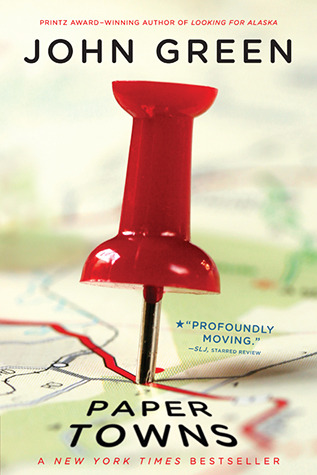
Paper TownsThe main thing I kept thinking while reading this book was that it felt very John Greeny.  From the themes it explores to the traits of the characters to the patterns of speech.  I can see how this might annoy some people and why they might think that the teens and the way they speak is unrealistic.  But the thing is I really believe that this is how John Green talked as a teenager.  It reminds me of a friend of mine used to mock Gilmore Girls for its unrealistic dialogue until my mom came to visit and he saw us talking to each other.  Which is to say that the average teen does not talk or act like the characters in Paper Towns but that doesn't mean that it's unrealistic.  Paper Towns by John Green: buy it or check it out today!


Friday, January 3, 2014

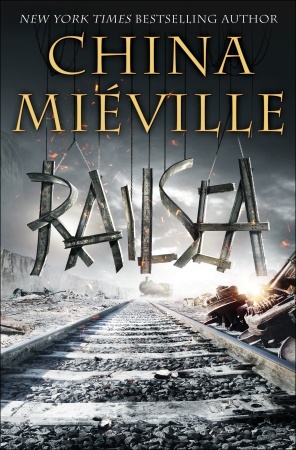
Railsea Review

Railsea

Book talk: Life on the railsea is not easy: bad tracks, traps laid by pirates, and attacks from below claim many lives.  But Sham is grateful for his job aboard the Medes.  At least he is finally seeing the world outside his home town.  Hunting giant moles can be exciting and people say that he should be proud to serve under a captain with her own Philosophy--an ivory colored creature she pursues with a passion and who has already taken her arm.  Sham wants something more though and his vague sense of unease finds a focus when he discovers a picture of the impossible: a place where the great tangle of the railsea condenses into a single track. But while the captain's nemesis is certainly deadly, Sham soon discovers that secrets are the most dangerous quarry of all.

Rocks my socks:  The world-building in this novel was the most creative and thorough I have read in a while.  The way the environment has changed affects everything from how people earn a living to what creatures exist to the written and spoken language.  Whole industries have cropped up around salvaging technology from the more prosperous past and the pollution that has seeped into the ground has created mutant creatures that thrive in the empty wastelands between cities.  The captain is reminiscent of Captain Ahab, but the story isn't a simple re-working of Moby Dick.  In this world there are many captains like Ahab and it's become a trend to have a 'philosophy,' a specific creature that has wronged a captain and which the captain has sworn to hunt until one or both of them dies.  They often gather at pubs to tell their stories and there's a museum to chronicle the captains who have been successful in their philosophy hunts.  This is only part of the story of Railsea though, and Mieville mainly includes it to lambast the idea.  I am a fan of books that use slang and dialect to help set an atmosphere for a story so I loved the language in this novel and how connected it is to the world-building.  There were many distinctive characters to enjoy as well and I naturally enjoyed the fact that Sham nurses a bat that becomes his companion and helps him along the way.

Rocks in my socks:  Mieville is a wonderful and highly opinionated author, but he doesn't always weave those opinions in seamlessly.  He was far from subtle in the points he wanted to make, and it often felt preachy to me.  After a lengthy book where I got attached to the characters and lost in their world the end was basically just a cheap shot about the greed of big businesses.  I don't necessarily disagree with him, but making that the climax made the whole plot seem cheap and pointless.  Even though I absolutely adored most of the novel, the ending left me with such a bad taste that it soured the whole novel for me.

Every book its reader:  I'd give this to science fiction fans looking for something with intricate world-building or those looking for a new take on Moby Dick.  The world-building, though wonderfully imaginative, throws you in the deep end instead of slowly acclimating you.  This, combined with the dialect make it difficult to get into, so I'd save it for more advanced readers. It can be violent at times, so I'd save it for 7th grade and up.

Extras:

China Mieville has his own site

There's an interview with Mieville about the book on Boing Boing

There's a trailer for the book, although I'm not sure how well comparing the book to Moby Dick will sell it to teens:


Source: school library

Bonus Quotes: 

“People have wanted to narrate since first we banged rocks together & wondered about fire. There’ll be tellings as long as there are any of us here, until the stars disappear one by one like turned-out lights.”


“Humans like nothing more than to pigeonhole the events & phenomena that punctuate their lives.”


“There was a time when wen we did not form all our words as we do now, in writing on a page. There was a time when the word "&" was written with several distinct & separate letters. It seems madness now. But there it is, & there is nothing we can do about it.

Humanity learned to ride the rails, & that motion made us what we are, a ferromaritime people. The lines of the railsea go everywhere but from one place straight to another. It is always switchback, junction, coils around & over our own train-trails.

What word better could there be to symbolize the railsea that connects & separates all lands, than “&” itself? Where else does the railsea take us, but to one place & that one & that one & that one, & so on? & what better embodies, in the sweep of the pen, the recurved motion of trains, than “&”?

An efficient route from where we start to where we end would make the word the tiniest line. But it takes a veering route, up & backwards, overshooting & correcting, back down again south & west, crossing its own earlier path, changing direction, another overlap, to stop, finally, a few hairs’ width from where we began.

& tacks & yaws, switches on its way to where it’s going, as we all must do.”

Railsea by China Mieville: buy it or check it out today!

Tuesday, August 27, 2013

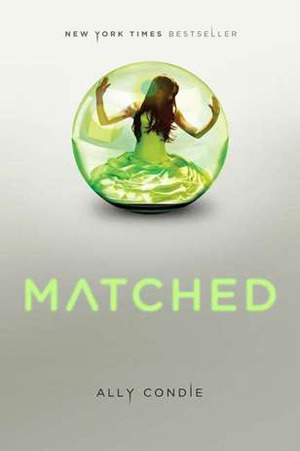
Matched Review

Matched (Matched, #1)

Book talk:  The world used to be a horrible place, but Society has changed all that.  Society guides each of its citizens down the optimal path: choosing their careers, their houses, and even their spouses.  Society is all that keeps them from the diseases, crimes, and wars of the past.  Cassia is a bit nervous on the way to her Match Banquet, but she knows that Society will choose the ideal match for her and keep her safe.  But then Society makes a mistake, and she realizes that there is more than one path that she could follow, and more than one match she could choose.  Making her own choices means risking everything, but how can she keep trusting Society to choose for her when she discovers the dark secrets they've been hiding?

Rocks my socks: I admit that I judged this book by its cover and wrote it off as another fluffy love triangle series.  Then I needed an audiobook for a last minute road trip with my sister.  I ended up being pleasantly surprised by the depth of the novel and the extent of the world-building.  Even the love triangle served the plot without eclipsing it.  It triggered important actions by the characters, but it was not the whole point of the novel.  Add to this the refreshing addition of parents that are loving and not completely useless, an allusion to Sisyphus (one of my favorite myths), and the fact that the poem "Do Not Go Gentle" (another favorite) was a pivotal to the story and you get a surprisingly refreshing novel that thoroughly entertained my sister and I through vast stretches of Arizona desert.

Rocks in my socks:  The book was predictable at times and strongly reminiscent of The Giver.  Both societies create order by eliminating choice of career, spouse, etc.  Both work to destroy memories of the past and euthanize the elderly at a certain age. Still, Matched provides plenty of details that differentiate it.  Besides, the question of how much freedom people would be willing to give up to ensure their safety is one American society has been grappling with for a long time. Benjamin Franklin famously cautioned "Those who would give up Essential Liberty to purchase a little Temporary Safety, deserve neither Liberty nor Safety."  The question remains relevant today as I was often reminded this summer as I travelled and submitted sheepishly to the TSA.  The recent controversy around the Patriot Act has also caused many to question how many civil liberties we are willing to give up for the sake of the safety of society.  So if another book gets today's teens talking about this very question then that's not a bad thing.

Every book its reader:  I'd give this to fans of other YA dystopias like The Hunger Games, although this one is more character than plot focused so those just looking for something dark and violent should look elsewhere.  The book is far less violent than most of the dystopian books out there and Society keeps such close tabs on the characters that it never gets too steamy either.  I'd say it's fine for 6th grade and up.

Extras:

Ally Condie has her own site with the usual blog, FAQ, bio, etc as well a play list of suggested songs for your listening pleasure

The series has its own official website with information about the books and a party pack pdf download with suggestions for throwing your own themed party (including a quiz you can take to see where the dystopian Society would place you.  The marketing department seems to have missed the point of the novels.)

There is also a fansite where you can get info on the books, the author, the upcoming movie, and quotes.

If that isn't enough for you head on over to the tumblr for more quotes, fan art, and other images related to the book.

If you want even more you can head on over to the wiki and get involved in the fan community.

There's an official trailer for the book that's appropriately ominous:


Those who have read the book may appreciate this recording of Dylan Thomas reciting "Do Not Go Gentle"


And to round the media extravaganza off, here's a scene from The Muppet Show where Fozzie attempts to recite another poem mentioned in the novel, Robert Frost's "Stopping By Woods on a Snowy Evening" (stay through the end because Statler and Waldorf's pun is my favorite part)


Bonus Quote:
“Growing apart doesn't change the fact that for a long time we grew side by side; our roots will always be tangled. I'm glad for that.”

Source: Audiobook from a public library

Matched by Ally Condie: Buy it or check it out today!

Thursday, March 21, 2013

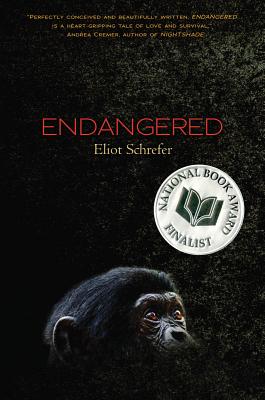
Endangered Review


Book talk:  Sophie knew that she shouldn't interfere, but when she saw him on the side of the road, she had to stop.  He was still a baby, but it was clear that he had been restrained with ropes recently and he was covered with sores and bald patches.  Why, out of all the suffering she had seen that day in the Congo, this was the sight that moved her to act she'll never know.  But one thing is for sure: that baby bonobo would change her life just as much as she'd change his.

Rocks my socks:  I am a complete sucker for any story involving apes, so it's impossible for me to provide a review on this book that is by any means impartial.  That said, I absolutely loved it.  From all the time Sophie ends up spending with the Bonobos and the way their social dynamic is described to the way Schrefer resists painting issues like bushmeat trade as black-and-white and instead highlights the complications and lack of easy answers regarding the political issues plaguing the Democratic Republic of Congo.  I remembered hearing about conflict in the area as a side note when studying apes as a child, but this is the first book I've read that ties in the problems facing the humans with those facing their hairier cousins, and does it well.  It was very impactful to read about a dystopian situation that so closely resembles actual events after reading so many far-fetched science fiction ones.  The book isn't necessarily more violent than something like The Hunger Games, but it is far more realistic, which makes it all the more chilling.

Rocks in my socks:  It's a minor complaint, but the first person perspective of the book means that in order to show all the complexities of the region, our narrator has to experience a lot personally.  To believe that she went though everything she did stretches credulity a bit, but stranger things have happened in reality I'm sure.

Every book its reader:  I'd give this to fans of animal stories or dystopias.  The plot quickly resembles the kind of survival fiction under a corrupt regime that is so popular in YA fiction today, all while maintaining a strong connection to what is happening with the bonobos to keep animal lovers involved.  The book isn't sensationalistic and if anything perhaps less violent than would be realistic given the situation, but it is still has a lot of violence and death involved.  It isn't for the faint-hearted.  I'd save it for 8th grade and up.

Extras:  


Watch Eliot Schrefer talk about the book and play with adorable bonobos!


Eliot Schrefer also has a website with information about him and the book

The National Book Foundation has a page for the book with extras

Endangered is a contender in this year's Battle of the Kids' Books

Source: school library

Endangered by Eliot Schrefer: Buy it or check it out today!

Friday, December 21, 2012

Mini Reviews: November 2012


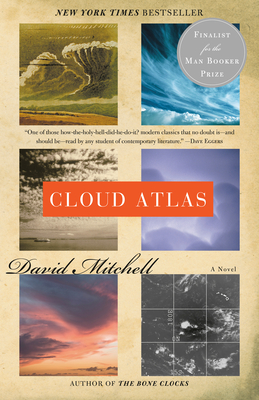
I found the chiastic structure of this novel fascinating and I admired Mitchell's ability to switch so seamlessly between genres and eras.  I appreciated that he was willing to make bold choices, like leaving a story off in the middle of a sentence.  Reading the book gave me a pleasure similar to unraveling a puzzle.  My favorite stories were "Letters from Zedelghem" and "An Orison of Sonmi~451" (stories of rakes and android/clone/etc rights are particular weaknesses of mine) but I enjoyed all of them.  What I didn't enjoy were the bits were Mitchell decided to lose his faith in the reader and suddenly explicitly state what he'd been artfully dancing around or tell us what lessons we should be learning.  My least favorite bit was his explanation of the title that came 3/5ths of the way through the novel.  You know, in case the reader had somehow made it that far without knowing what the heck was going on.  The end with its saccharine and explicit call to arms didn't exactly delight me either.  Instead of trusting readers to pick up on the lessons clearly presented by the course of the narrative Mitchell suddenly turns into Aesop and tells the reader what they should have learned from the story.  I'm sure readers capable of puzzling their way through what is not an altogether easy read are more than capable of drawing their own conclusions.  At least Mitchell is also capable of making fun of himself for these same tendencies: at one point a character who is reading a manuscript describing the story of another character says "One or two things will have to go: the insinuation that Luisa Rey is this Robert Frobisher chap reincarnated, for example. Far too hippie-druggy-new age."  It can't be denied that Mitchell has a way with words and is eminently quotable.  Here are a few of my favorites:

"Implausible truth can serve one better than plausible fiction."

"How vulgar, this hankering after immortality, how vain, how false. Composers are merely scribblers of cave paintings. One writes music because winter is eternal and because, if one didn’t the wolves and blizzards would be at one’s throat all the sooner."

"Anger sparked in Timothy Cavendish like forks in microwaves."

"Sometimes the fluffy bunny of incredulity zooms round the bend so rapidly that the greyhound of language is left, agog, in the starting cage."

"Humor is the ovum of dissent"

"Prejudice is permafrost"

"All the woe of the words 'I am' seemed dissolved there, painlessly, peacefully" [on first seeing the ocean]

"Rights are susceptible to subversion, as even granite is susceptible to erosion."

"Nothing is as eloquent as nothing."

Cloud Atlas by David Mitchell: Buy it or check it out today!

At a time when everyone seems up in arms about e-books and corporations versus the physical and local, it is refreshing to see a book that combines the two sides to such charming effect.  On the one hand, the main character works in an independent bookstore that "is the kind of store that makes you want to be a teenage wizard."  There, he discovers a secret society founded in the last publishing revolution that had everyone freaking out, back in Gutenberg's time.  On the other hand, his love interest works for Google and they investigate this society using the power of modern technology.  The conflict between those who revere the traditional way of doing things and those who are obsessed with the latest technology permeates the entire novel.  Sloan refrains from advocating one over the other and seems to value aspects of each, a very middle-of-road approach--which is perhaps why he decided to name the font at the heart of the intrigue Gerritszoon.  (Gerrit Gerritszoon is the birth name of Erasmus, a scholar who was known for his balanced approach.)  Sloan walks the line between opposing sides with the skill and playfulness of a tight-rope walker.  Even the emblem of Aldus Manutius, the historical printer at the center of the fictional secret society, is an illustration of a famous oxymoron: festina lente or 'make haste slowly' and the characters repeat this phrase to each other throughout the novel.  (Incidentally the dolphin and anchor emblem of Manutius has also been adopted by Beta Phi Mu, the library and information studies honor society that I was just inducted into this summer.)  In addition to writing with passion about technologies old and new in a fascinating fashion, Sloan also succeeds in creating quirky characters that instantly won me over.  Sloan is particularly skilled at introducing these characters in a way that made them instantly recognizable and endearing, like "Oliver daydreams about Ionian columns," or "[Matt] works with crazy intensity, feeding hours like dry twigs into the fire." I know I'm more or less the exact demographic Robin Sloan was aiming for, I even read much of this in a teahouse in San Francisco, but I absolutely loved this novel.  I hope that other bibliophiles can stop writing alarmist articles about the death of books long enough to read and enjoy this one and see what can be accomplished if we work together with all the tools, both old and new, at our disposal.  Mr. Penumbra's 24-Hour Bookstore by Robin Sloan: Buy it or check it out today!

Copper is an absolutely absurd and downright delightful comic collection.  It takes place in a post-apocalyptic landscape, but the bleak background just makes copper's optimism shine brighter.  His faithful yet jaded dog Fred is never far behind though, and he balances things out.  The comics have a wide range of themes and tones from absurdly silly to quietly introspective.  You never know what you're going to get, and that's part of the charm. Most of the comics are one-offs but there are a few longer story lines as well that help to establish more of the universe.  Fred is now one of my all time favorite comic characters with his insecurities, worries, and tendency toward existential crises.  The writing is almost poetic in the way it conveys complex  ideas with sparing word use yet it never loses its sense of humour.  The artwork is exquisite as well and I particularly enjoyed Kibuishi's use of color with the different palettes always perfectly matched to the various tones of the comics.  The overall effect of art, color, and words combined to convey the message of each story is an example of how powerful comics can be.  I'm sure my students will also enjoy the interview with the author at the end where he describes his process in detail and with plenty of pictures to inspire and advise children who want to make their own comics.  Copper by Kazu Kibuishi: Buy it or check it out today!

I have been a fan of Orhan Pamuk since high school because he always opens up new worlds to me in an interesting way.  His latest novel was no exception.  The Museum of Innocence is tale of love and obsession.  Kemal is engaged to the rich and beautiful Sibel, but ends up falling for Fusun, a poor shop girl.  When he realizes that he has lost her his love turns into an obsession that completely takes over his life.  He relieves his pain by collecting objects that she has touched or that remind him of her, and it is through these objects that his story is told.  The book is written as if addressing a visitor to the museum that he eventually creates to house all these objects.  The narration has a ruminative quality as it bounces back and forth between describing the moment and what is to follow.  It sounds very natural, like the narrator is having a conversation with the reader.  After all when people set out to tell a story of importance to their lives they rarely do so in a completely linear fashion.    That's what I enjoyed most about this novel: the way Pamuk captured these tricks of memory:  The way it is possible to pass years in seemingly untenable situations because they are lived not in years but in a series of moments, the way our happiest moments can only be recognized in retrospect, the way objects can bring up memoires you might have otherwise forgotten, the way they can seem infused with the presence of a person who once handled them, the way memories of a person can prevent you from seeing someone as they really are.

The novel isn't just a portrait of Kemal and Fusun, but of the time and place they were together.  The novel includes many descriptions of Istanbul and its society from the parties of the elite to quiet nights spent in front of televisions by families barely scraping by.  Because the novel is told from the perspective of someone looking back on past events, the action of the novel always seemed a bit distant. Even when the romance came to its inevitably tragic end, it didn't have a strong emotional impact on me.  Instead the novel had a ruminative quality that left me thinking about the objects in my life, the stories they tell, the people that have left their mark on me, and the times and places that I've lived in. This is a novel to savor, not gulp. If want to travel but can't leave home this novel can make another place come alive for you. The Museum of Innocence by Orhan Pamuk: buy it or check it out today!


November is apparently the month I read about failed romance.  First Tiger Lily, then The Museum of Innocence, and now Stag's Leap--even my faculty and staff book club picked Feed for November.  Perhaps there's something about watching leaves slowly change color, fall off branches, and wither up that reminds me of love fading away.  Whatever the reason, this collection fit my mood well as Olds told the story of her marriage floundering, her divorce, and the years that followed.  In painfully honest poems she describes moments when she remembers the good times and moments when she tries to forget them.  Moments when being alone is terrifying and moments when it's freeing.  Every poem is very personal but they're also so honest that anyone who has ever loved and lost will be able to find themselves somewhere in one of them.  I think Tiger Lily would enjoy the collection.  Stag's Leap by Sharon Olds: Buy it or check it out today!
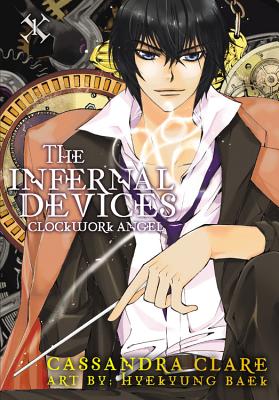
This novel is particularly well-suited to a manga-style adaptation.  It easily seems like it could have been its original format.  In fact, I think I might have enjoyed this adaptation more than the original novel. The source material is very visual with its fantastic creatures and fight scenes and I enjoyed seeing Baek's depictions of the scenes and characters (and their pretty, period costumes!) I like Clare's novels more for their plot than their prose anyway so I didn't mind the clipped version of the text.  If anything it eliminates some of the aspects that annoyed me about the original book.  I enjoyed the excuse to re-live my favorite scenes as well.   I don't think reading the original novel is necessary to enjoy this version (although I think fans of the novel will like it.)  I'd recommend it to fans of other period fantasy manga like The Earl and the Fairy  whether they've read the original or not.  The Infernal Devices by Cassandra Clare, art by HyeKyung Baek: buy it or check it out today!

Friday, August 17, 2012

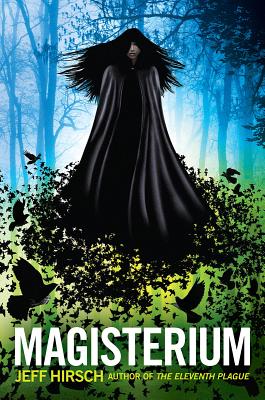
Magisterium Review


****Disclaimer: I am writing this review based on an Advanced Readers Copy****

Book talk: 813: a beautiful planet full of forests and wildlife carefully studied by the resident scienitsts.  And the best part?  It's light years away.  Just to travel there takes 6 years--meaning that when people go there, they don't come back.  They have to say goodbye to everyone and everything they've ever known.  It's not an assignment for everyone, but it sounds like paradise to Glenn.  Ever since her mother disappeared and her father began doggedly pursuing insane ideas Glenn has wanted nothing more than to get away.  She's worked to make herself a good candidate and if she can get her father's signature she could skip a year at school, go to the Academy and be ready to leave with the next departing group in four years.  There's not much she'd miss.  Things have been weird with Kevin since that night at the train station and her cat she could take with her.  Her father is the only thing standing in her way, and he's so distracted that he is an easy obstacle to overcome.  At least until his crazy theories become a dangerous reality and Glenn finds herself leaving everything behind ahead of schedule--and in a completely different way than she had planned.

Rocks my socks: I like the way Hirsch blends the worlds of fantasy and science fiction in this novel and while the YA market is glutted with dystopias at the moment the premise of the novel is unique enough that it still contained some surprises and I felt that it had some interesting things to say.  The characters have some complexity to them, which I always appreciate, and even the government agent that would usually remain a faceless evil is given a family to be fighting for.  Of course my favorite character was (highlight for minor spoiler) Glenn's cat who ends up turning into a cat/human hybrid warrior with a troubled past but a heart of gold--how could I not love this book!?  I appreciated that Hirsch had the big kiss between the two friends happen before the novel started instead of milking it for all it was worth and there doesn't seem to be a love triangle in sight--both of which help set this novel apart.  Glenn also breaks some YA heroine stereotypes by being a computer programming whiz and decidedly uninterested in romantic relationships.  The best friend/love interest Kevin Kapoor was a good character too and had me laughing out loud (in public) several times, although I didn't like him as much in the second half of the novel.  The pacing was deliciously fast and I read it within 48 hours even though I had a lot of previous commitments that weekend and was in fact staying with my cousins and probably should have been socializing with them more.  They're nice, book-loving people though so I'm sure they understood.

Rocks in my socks: It's certainly not Hirsch's fault but I am feeling a bit burnt out on YA dystopias.  While there were enough new and unique ideas and twists in the novel to keep me reading there were definitely also times when I felt a sense of deja vu.  Some of the plot points felt a bit too convenient for me, especially near the end and I felt that some of the characters and plot points were glossed over but I tend to favor details over pacing.  I'm sure many readers will appreciate the fast pace and not be bothered by the lack of details on certain points.

Every book its reader: The novel is dark even for a dystopia, although not more so than The Hunger Games and that certainly has very young fans.  Still it seems to be aimed at (at the very least) a middle school set.  I'd recommend it to fans of science fiction and fantasy who are looking for more fast-paced dystopian fiction to read.

Extras: 
Jeff Hirsch has a website where you can find a video of him talking about the book

Source: Free ARC I got at #ALA12

Magisterium by Jeff Hirsch

Buy it or check it out today!
Sunday, June 10, 2012

The Wikkeling Review


Book talk: Every house on Henrietta's street is identical: each one newly made of vinyl and glue with flat roofs sitting behind plastic lawns in their own soundproof and airtight cocoon.  Every house, except Henrietta's.  Henrietta's house is made of wood, with a sloping roof and an old-fashioned attic.  Henrietta's mother thinks that it must be some contaminant in their old house that is causing Henrietta's blinding headaches.  But Henrietta knows it isn't the house at all.  It's the Wikkeling.  Most people can't see the Wikkeling and Henrietta knows if she tries to explain it she'll only sound crazy.  Luckily she's found some allies, but will the neighbor boy, a kindergartener, and a Wild Housecat be enough to defeat the mysterious creature or will they all end up Finished?

Rocks my socks: I read this book at the end of long day when I was in a terrible mood, but from the very start Arntson made me forget all my troubles and took me away to a frightening and thought-provoking dystopia that nevertheless left me feeling far better than when I picked up the novel.  First off it started with a poem about a cat which instantly wins it points in my book.  Secondly it established the atmosphere and setting with wonderfully creative details like exhaust that is made to smell like lilacs to make the constant traffic jam more bearable and honk ads to take advantage of it.  Thirdly it introduces us to the main character Henrietta who is described as looking like a brick, "And yet Henrietta was not a stupid, confused, petulant block.  Or at least, she didn't feel like one.  Inside, she was just herself--a person to whom she'd scarcely yet been introduced."  The narrator then goes on to warn the reader: "She will not become beautiful when someone gives her a new hairstyle.  She will not find a miracle cure for her pimples when an angel sees she's a good girl inside.  She will not find out that she's actually a princess, and she won't become happy forever when a prince marries her.  Those books are out there, and your school librarian can help you find one.  This isn't it."  I know not everyone likes that kind of fourth wall destruction but when I read that passage I was completely sold.

A lot of time is spent on describing the school and as someone who works in an elementary school I found the descriptions eerily prescient and appreciated their warning about where we may end up if we are not careful--and isn't that what the best dystopian novels do?  I am lucky because I work in a really creative and wonderful independent school but I've had enough discussions with colleagues at more typical schools to feel a chill down my spine when I read about how the classes were more or less constantly preparing for the next standardized test with instant updates sent to parents on their student's progress via their cell phones.  Students who score poorly are marked as 'at risk' so that their score will not bring down the class average and if that happens twice they are 'finished.'  At lunch students sit in individual carrels and watch videos on history, the only non-graded period because history "wasn't related to anything"  (I knew that would make my history grad student sister cringe)  This period provided the delightfully dystopian quote "We must be courageous enough to look forward without fear, and sensible enough to fear looking backward!" When travelling to and from school students wear four seat belts on the bus: one lap, two shoulder, and a one across the head.  Even when they are sleeping a BedCam sends their image directly to the parents' bedroom for monitoring.

The novel is at times a dystopian commentary on society, at times a horror novel, at times a bildungsroman, and there's also plenty of humor infused throughout.  My personal favorite was the crosswalk where Henrietta "pushed the button and waited for the picture of the dead pedestrian to turn into the picture of the scared pedestrian."  I appreciated the logic of Henrietta when she's convincing a friend to do something dangerous: "We'll be careful...This kind of thing is the reason people invented carefulness in the first place."  Well said!  While we're on the subject of Henrietta's friends I love Rose and Gary.  I loved that in a society where kids who are Finished end up as garbagemen like that's the worst fate possible Gary actually is fascinated by garbage. I was all ready to be disappointed in the novel for disparaging the profession but I should have had more faith in Arntson.  Rose is a wonderfully precocious kindergartener who lives in a secret library so of course I love her.  I'd be remiss to end this review without mentioning Terrazzini's wonderful illustrations throughout, especially in the excerpt from the Bestiary which contains delightfully creative creatures that I'd love to learn more about (hint hint, wink wink, nudge nudge Arntson!)  The whole book is beautifully designed in fact from the binding to the layout to the endpapers.  It's definitely one you'll want a physical copy of to decorate your shelf once you're done with it.  You can go ahead and judge this book by its cover all you want!

Rocks in my socks: Nothing, I absolutely loved this novel and I'm very thankful to it for plucking me out of the deep, dark mood I was in when I started it.


Every book its reader: The novel is partly a horror story and while it's wonderfully creepy it's not actually that violent or gory.  I can definitely see some children getting nightmares from the Wikkeling (myself at a young age included but even Darby O'Gill ant the Little People gave me nightmares, so that's not saying much.)  Overall I'd say this novel is perfect to give to children who like horror stories to creep them out without being too violent.  It would be a good choice for kids who enjoyed Coraline or The Graveyard Book as it's no scarier than either of those and of a similar tone. Fans of the Lemony Snicket series will also enjoy this novel and appreciate Arntson's dark humor.  The dystopian setting gives older students and even adults plenty to ponder as well and it has a recommendation from James Dashner on the back which should be enough to sell it to my middle school students as half of them are obsessed with Maze Runner.  

The Wikkeling by Steven Arntson

Buy it or check it out today!