Sunday, June 10, 2012

The Wikkeling Review


Book talk: Every house on Henrietta's street is identical: each one newly made of vinyl and glue with flat roofs sitting behind plastic lawns in their own soundproof and airtight cocoon.  Every house, except Henrietta's.  Henrietta's house is made of wood, with a sloping roof and an old-fashioned attic.  Henrietta's mother thinks that it must be some contaminant in their old house that is causing Henrietta's blinding headaches.  But Henrietta knows it isn't the house at all.  It's the Wikkeling.  Most people can't see the Wikkeling and Henrietta knows if she tries to explain it she'll only sound crazy.  Luckily she's found some allies, but will the neighbor boy, a kindergartener, and a Wild Housecat be enough to defeat the mysterious creature or will they all end up Finished?

Rocks my socks: I read this book at the end of long day when I was in a terrible mood, but from the very start Arntson made me forget all my troubles and took me away to a frightening and thought-provoking dystopia that nevertheless left me feeling far better than when I picked up the novel.  First off it started with a poem about a cat which instantly wins it points in my book.  Secondly it established the atmosphere and setting with wonderfully creative details like exhaust that is made to smell like lilacs to make the constant traffic jam more bearable and honk ads to take advantage of it.  Thirdly it introduces us to the main character Henrietta who is described as looking like a brick, "And yet Henrietta was not a stupid, confused, petulant block.  Or at least, she didn't feel like one.  Inside, she was just herself--a person to whom she'd scarcely yet been introduced."  The narrator then goes on to warn the reader: "She will not become beautiful when someone gives her a new hairstyle.  She will not find a miracle cure for her pimples when an angel sees she's a good girl inside.  She will not find out that she's actually a princess, and she won't become happy forever when a prince marries her.  Those books are out there, and your school librarian can help you find one.  This isn't it."  I know not everyone likes that kind of fourth wall destruction but when I read that passage I was completely sold.

A lot of time is spent on describing the school and as someone who works in an elementary school I found the descriptions eerily prescient and appreciated their warning about where we may end up if we are not careful--and isn't that what the best dystopian novels do?  I am lucky because I work in a really creative and wonderful independent school but I've had enough discussions with colleagues at more typical schools to feel a chill down my spine when I read about how the classes were more or less constantly preparing for the next standardized test with instant updates sent to parents on their student's progress via their cell phones.  Students who score poorly are marked as 'at risk' so that their score will not bring down the class average and if that happens twice they are 'finished.'  At lunch students sit in individual carrels and watch videos on history, the only non-graded period because history "wasn't related to anything"  (I knew that would make my history grad student sister cringe)  This period provided the delightfully dystopian quote "We must be courageous enough to look forward without fear, and sensible enough to fear looking backward!" When travelling to and from school students wear four seat belts on the bus: one lap, two shoulder, and a one across the head.  Even when they are sleeping a BedCam sends their image directly to the parents' bedroom for monitoring.

The novel is at times a dystopian commentary on society, at times a horror novel, at times a bildungsroman, and there's also plenty of humor infused throughout.  My personal favorite was the crosswalk where Henrietta "pushed the button and waited for the picture of the dead pedestrian to turn into the picture of the scared pedestrian."  I appreciated the logic of Henrietta when she's convincing a friend to do something dangerous: "We'll be careful...This kind of thing is the reason people invented carefulness in the first place."  Well said!  While we're on the subject of Henrietta's friends I love Rose and Gary.  I loved that in a society where kids who are Finished end up as garbagemen like that's the worst fate possible Gary actually is fascinated by garbage. I was all ready to be disappointed in the novel for disparaging the profession but I should have had more faith in Arntson.  Rose is a wonderfully precocious kindergartener who lives in a secret library so of course I love her.  I'd be remiss to end this review without mentioning Terrazzini's wonderful illustrations throughout, especially in the excerpt from the Bestiary which contains delightfully creative creatures that I'd love to learn more about (hint hint, wink wink, nudge nudge Arntson!)  The whole book is beautifully designed in fact from the binding to the layout to the endpapers.  It's definitely one you'll want a physical copy of to decorate your shelf once you're done with it.  You can go ahead and judge this book by its cover all you want!

Rocks in my socks: Nothing, I absolutely loved this novel and I'm very thankful to it for plucking me out of the deep, dark mood I was in when I started it.


Every book its reader: The novel is partly a horror story and while it's wonderfully creepy it's not actually that violent or gory.  I can definitely see some children getting nightmares from the Wikkeling (myself at a young age included but even Darby O'Gill ant the Little People gave me nightmares, so that's not saying much.)  Overall I'd say this novel is perfect to give to children who like horror stories to creep them out without being too violent.  It would be a good choice for kids who enjoyed Coraline or The Graveyard Book as it's no scarier than either of those and of a similar tone. Fans of the Lemony Snicket series will also enjoy this novel and appreciate Arntson's dark humor.  The dystopian setting gives older students and even adults plenty to ponder as well and it has a recommendation from James Dashner on the back which should be enough to sell it to my middle school students as half of them are obsessed with Maze Runner.  

The Wikkeling by Steven Arntson

Buy it or check it out today!

Friday, June 8, 2012

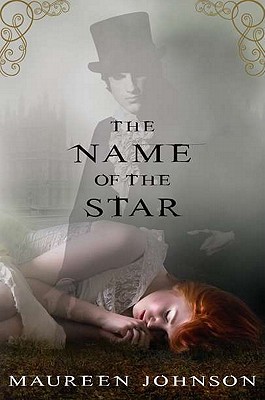
Name of the Star Review


Book talk: Rory grew up in Bénouville, Louisiana "an unstable place, built on a swamp."  Bénouville is full of interesting characters like cousin Diane, who runs the Healing Angel Ministry out of her living room or Billy Mack who started his own religion in his garage.  But it's not until Rory leaves Bénouville for senior year abroad in London that she starts to suspect herself of going crazy.  Soon she has more to worry about than picking up on British slang and keeping up with her new school's strict academic standards.  A new Jack the Ripper is on the loose and if she isn't careful, Rory may be the next victim.

Rocks my socks: Rory's distinctive Southern charm introducing the reader to London as she herself gets to know it is the major draw of the novel.  I liked the small details, for example when Rory first hears that someone "pulled a Jack the Ripper" after she lands in London she figures it's just some slang she hasn't learned yet and says "oh, sure" without much concern.  Rory's not some fawning Belle though, which I appreciate.  She is as strong and resilient as the town she comes from-rebuilding itself after every flood. The premise is interesting as well.  I liked the way Johnson incorporated the ever-present surveillance in London into the novel and how she was able to create a mystery in spite of it.  I also found how the public reacted to the killings interesting.  The new Ripper re-creates the murders of the original on the same dates so everyone knows when the next will happen.  The public eats it up and the news plays it up and takes advantage of it in a way that is unfortunately realistic, despite the fact that people are being brutally slaughtered. Tourism soars as amateur detectives arrive on the scene and someone even makes a 'singing kidney video' based on the murders that goes viral.  The night of the Double-Event when two people were murdered "was bigger than New Year's" and Rory and her school-mates' main concern is that they would not get to participate because they were being locked in for their own safety.  Ah, youth! I appreciated other realistic touches as well, like the fact that Rory knows about how and why witnesses are often unreliable and she thinks about this during her own interrogation by the police and yet knows that she can't prevent it.  Most of all I appreciated that Johnson always provides moments of levity to break up the seriousness, like the zombie spice girls costumes that Rory and her friends wear to a fancy dress party.

Rocks in my socks: If it was the realistic touches that delighted me it was the supernatural touches that disappointed me.  The premise is a bit weak, making the final reveal of murderer and motives anticlimactic.  There is a supernatural element to the story that creates several plot holes as supernatural elements are wont to do.  For example (highlight for spoiler) the killer ends up being a ghost and despite the fact that it is previously established in the novel that a ghost can't be given a cell phone because it would look weird to have a phone floating about in the air, when the killer drags someone across London at knife point on a night that is specifically described as having a large police presence, no one notices.  Even when she's held at knifepoint in a small room the bystander who can't see ghosts doesn't notice the knife. In addition, for a book described as full of romance on the inside flap the romantic sub-plot seems tacked on and non-essential.  Maybe I'm just biased though because Rory never goes for the guy I liked--the one who seems to have read the entire library and memorized the location of each book *swoon* (highlight for spoiler) sure he turns out to be a ghost, but we all have our quirks, don't we?  On a side note it bothers me that at one point Rory more or less pays for someone to write an entire essay for her and she never seems to feel guilty about it and there are no consequences.  Granted she is going through some difficult times but perhaps she could have tried explaining that to her teachers instead.  With all the Ripper madness going on I'm sure they'd be understanding.  Still, I was so enchanted by Rory that I was mostly willing to suspend my disbelief and forgive her for this infraction.

Every book its reader: The original Jack the Ripper murders were quite gruesome and so any story revolving around them is going to have its fair share of gore.  Outside of the murders though there isn't much violence and the romantic sub-plot never gets enough attention to go too far.  I'd recommend it for 6th graders and older looking for a supernatural thriller with a splash of dark humor.

The Name of the Star by Maureen Johnson

Buy it or check it out today!
Saturday, April 28, 2012

Chime review


Book talk: Briony is a wicked girl.  Her temper combined with her supernatural powers have already resulted in permanent damage to her twin sister, the burning of her library, and a flood in her house.  Sometimes she forgets just how evil she is and begins to think that perhaps she could get close to the handsome new lodger, but then she remembers what happens to those who get close to her and that she doesn't deserve happiness.  She must do two things: remember that she is wicked and protect her sister.  But her powers do allow her to see the spirits that others can't and it's those spirits that are sending a plague of swamp cough to the village children.  Is it worth the risk of meeting with them, if it means that she can make the disease go away?  Or will the combination of Briony and these magical creatures produce even more deadly results?
[Reading the first chapter aloud is sure to generate interest as well--it's short and sweet and intriguing]

Rocks my socks: The language in this novel is absolutely gorgeous and it establishes the tone and setting well.  I felt completely immersed in Briony's swampy world whenever I opened the book, which was far different from the spring break setting in San Diego that was my reality at the time.  I love novels that can transport me so wholly.  I liked the main characters as well, despite Briony's constant self-loathing that got a bit old at times. I loved Eldric and Briony's relationsip, especially with Briony's early description of it: "In a proper story, antagonistic sparks would fly between Eldric and me, sparks that would sweeten the inevitable kiss on page 324.  But life doesn't work that way.  I didn't hate Eldric, which, for me, is about as good as things get." I particularly appreciated the different perspective the ending sheds on characters that the reader, and Briony, thought they knew.

Rocks in my socks: The end disappointed me on several levels (highlight for spoiler) Billingsley had a lovely set up to play with the idea of fate and whether or not someone can be born evil but instead she just said well Briony isn't a witch after all so she isn't evil.  Clearly implying that if she had been a witch then she would have been evil and there wasn't anything she could have done.  In fact the story doesn't seem to have any problem with killing actual witches.  At the end we see a witch character who is dying because she has no one to feed off of and not an ounce of sympathy is spared for her, despite the fact that Briony so recently believed herself to be a witch and that the witch was only guilty of feeding herself the only way she apparently could.  If a creature's only source of nourishment and survival is a human can they really be called evil for trying to stay alive?  Is a lion evil for eating a zebra?  This was particularly disappointing to me considering that earlier in the novel Briony defends the spirit that is sending out the swamp cough that is specifically aimed to kill children by saying that he was just trying to prevent them from draining the swamp and thereby killing him.  But feeding off hot boys?  No excuses!


While I'm under the spoiler umbrella I think I'll mention the fact that I was not entirely okay with the way they handled assault in the novel. At one point a character tries to force Briony and she fights back and is saved before things go too far by Eldric.  Then five minutes later she's making out with Eldric.  I'm not sure if I was in Briony's shoes I'd be in the mood for kissing anyone right after something like that happened.  Then at the end after Eldric's wounded he pulls an 'I'm still a man and stronger than you' and forces her to the floor and says "I can still unlace a girl's chemise."  He then lets her go and apologizes but apparently it wasn't his fault it was because she was getting down on herself and he's so in love with her that her whining  hit him as a hard blow so he clearly had to physically assault her back.  I'm oversimplifying of course but just the implication that it's ever a someone's fault that they are assaulted is not one I'm okay with.  To make it even worse he then proposes to her immediately after all this and after briefly pointing out that he was acting like a jerk when he forced her to the ground a minute ago she accepts and acts like he's the one doing her a favor.  Come on! I wanted to see those two crazy kids work it out as much as anyone else but this was not the way to do it.  I really liked the book until the end.  I just wish it had pulled a French ending and cut it off immediately after the climax with no falling action.

Every book its reader: The novel depicts some pretty bleak circumstances, but it does end on a hopeful note.  There is a bit of violence as is to be expected in a novel with witches and spirits and ghosts and at least one zombie but not excessive amounts.  There aren't any explicit scenes but oblique references are made to things like Blackberry Night (which apparently usually results in many hasty weddings) and arsenic addiction (it was thought to increase virility--who knew?)  Overall I'd keep it for 7th grade and up.

Chime by Franny Billingsley

Buy it or check it out today!

Wednesday, April 25, 2012

Where Things Come Back


I really thought I'd love this novel, but I didn't.  The reviews described the setting as a quirky small town, the plot as slightly absurd, and the narrator as sarcastic.  All these things turned out to be true, but despite these elements usually producing a favorable bias in me and all the awards and glowing reviews it received, I did not like it.  At all. I was tempted not to review it, but I made a commitment to myself to review all the books I read and I'm not going to shirk that because my opinion differs from the general librarian consensus and that makes me feel awkward.  So here goes:

At first I loved the book.  The first few chapters of my library copy are covered with post-its marking little passages I found amusing or witty.  The book drew me in right away.  How could it not with an opening sentence like " I was seventeen years old when I saw my first dead body."  Little details like Cullen not understanding exactly what his father did for a living made it easy for me to relate to him.  But as I continued to read, quirks like Cullen (the first person narrator) referring to himself in third person out of the blue started to annoy me.  It was funny the first time, but the returns on that particular gag diminished rather quickly while the instances of its use only seemed to increase.

The next big problem for me was that the central driving force of the plot, namely the disappearance of Cullen's brother Gabriel, did not interest me.  I was far more interested in the character of Cullen than I was in whether or not his brother was ever found.  This took most of the tension out of the novel.  The problem was that as I reader I mostly heard about how awesome Gabriel was instead of seeing it for myself. Cullen seems to idolize him as some quirky hipster god wise beyond his years who walks to the beat of his own drum and doesn't care what others think.  Unfortunately he seemed more like a caricature of a misunderstood small town teen than any kind of full-fleshed character, right down to the Pink Floyd and Led Zeppelin t-shirts and battered copy of Catcher in the Rye.

That brings us to the alternating chapters told in third person following caricatures of religious zealots.  First Benton Sage and then Cabot Searcy.  These characters are never really fleshed out in the brief glimpses we get of them and their actions seem completely unjustified to me.  I realize that they're supposed to be a bit crazy but that doesn't justify a lack of motivation for their decisions. Enough time was spent on their stories that I felt as a reader I should have some kind of sympathy with them, but that sympathy and understanding was never achieved.  Instead these alternating chapters just provided an unwelcome interruption to the narrative even when the seemingly unrelated narratives finally connected (I was shocked!)

The end didn't really make any sense, but that wasn't what annoyed me most about it.  That honor went to the fact that throughout the novel Cullen occasionally added to a running list of good book titles that vaguely related to whatever had just happened to him.  Anyone want to guess what the last title/last line of the novel was?  It reminded me of the end of Night Circus that annoyed me so much.   I can understand a debut author perhaps not being experienced enough to realize how cliche something like that is and thinking themselves very clever and original to end their novel with the beginning/title but isn't that why we have editors?  So there's someone more experienced to say "maybe you should re-think that ending, you're really not as clever as you think."  It's almost as bad as the 'and then I woke up and it was all a dream' ending.

Despite all of that I really did enjoy parts of the novel.  Cullen makes a big deal of his brother's wisdom, but I found Cullen's explanations of why society feels the need to put labels on people and how people respond to the tragedies of others the most insightful parts.  I appreciated Whaley's willingness to play with different narrative techniques and his creativity in the way he incorporates the story of the long-lost woodpecker.  I admired his boldness in tackling such issues as drug addiction, suicide, loss of a sibling, obsession, and stalking (in a this-is-creepy and not romantic light.)  Mostly I enjoyed the character of Cullen and all his flaws and humor and tendency to imagine his enemies as zombies.  It didn't all work for me this time around, but I can see why he won the Morris debut award (although I'm still scratching my head at the Printz) and I think I will read his next book.  Hopefully he'll work out some of his authorial kinks by then.

Where Things Come Back by John Corey Whaley

Buy it or check it out today!

Monday, April 23, 2012

Sean, Puck, and the Race of Horses

I was listening to Belle and Sebastian's "Judy and the Dream of Horses" recently and naturally it reminded me of The Scorpio Races, which I enjoyed so much.  So I decided to write the following parody version:

Sean was a wild sea horse
One foot on land one foot on sea
Tired of running the course
He wanted Corr and he wanted freedom

Sean was a teenage orphan
His mother left when he was young
His father died in the races
The beach was red with all of his blood

Sean I don't know you
Are you going to gamble everything? 
Sean I don't know you
Are you going to gamble everything?

Sean rides a fast sea horse
He trained Corr to race by the shore
They grew up silently together
Racing and working and staying apart

Sean never felt so good
Except when he was racing
Sean never felt so good
Except when he was racing

Puck loves her horse and brothers
But her family keeps falling apart
Her parents dead her brother leaving
The Scorpio races are her last chance

Puck you're just trying
To find and keep the dream of family
And she risks her life
Training for the race of horses
Races of horses
Race of horses
Race of horses

The fast sea horses are taken
The land horses aren't up for the fight
So Puck, where does that leave you?
Training your horse on the cliff edge up high

With Sean running alongside
Quickening your pulse when you watch
With your own horse below you
Trying to keep up when you race

If you think that you can win you have to survive
Training for the race of horses
Risk it training for the race of horses
You race your horses

Monday, April 2, 2012

Mini Reviews


I was cracking up as I read this brief but brilliant volume.  The scenario of an older sibling being jealous of a new sibling is familiar enough, as is the precocious child character.  But the novel takes unexpected and hilarious turns as the baby ends up being a gateway between dimensions which aliens slip through.  Thaddeus hopes that this will mean an exciting apocalyptic confrontation but they turn out to be "Missionaries of smiles and happy feelings" and even when he kills one of them, they just forgive him.  One of my favorite panels is one of Thaddeus sitting in time out after calling his sister dumb.  The caption reads "Thaddeus K. Fong: Martyr for Truth"  and while most 8 year olds probably wouldn't use the word 'martyr' the childish sense of keen injustice over the incident is spot-on.  Other details like Thaddeus's goal of having a facial hair style named after him (and drawing it on with marker while he waits for hair to grow) and the aliens' fascination with Connan O'Brien kept me laughing the whole time.  Anyone who enjoys reading about precocious evil geniuses and is looking for something quick to make them laugh will enjoy this comic.  Even though the main character is eight though I'd save it for middle schoolers at least.
Prime Baby by Gene Luen Yang: Buy it or check it out today!

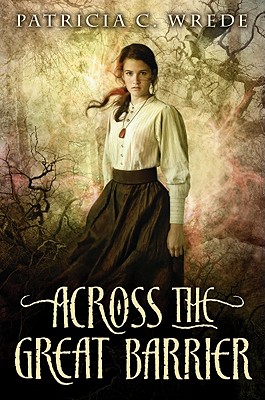
I love this series (see my review of the first book here) that puts a twist on the alternate Victorian societies brimming with magic so popular in fiction right now by setting the story in America. This novel spend more time beyond the magical barrier over the Mississippi that keeps dangerous magical animals at bay so it has the feel of a magical western and I loved it.  While this one covers a shorter period than the previous novel, it still isn't terribly fast-paced.  A lot of the novel is Eff weighing decisions and thinking about what she should do which is part of why I like it, but will put fans of more fast-paced adventures off.  Really the main draw here is the excellent world-building.  I was always eager for more details of how magic has influenced this version of the United States.  Despite all the magic the tones remains one of a western more than a high fantasy with unique folksy phrases like "It'd take a blind prairie skunk all of ten minutes to see that the plans in your family have always been about Lan" peppered throughout and a general no-nonsense frontier style and realistic settler concerns.  Eff remains a strong lead more concerned about a future involving adventure beyond the barrier than settling down and finding a husband.  Even without a nail-biting plot my interest in the world and affinity for Eff were enough to keep me turning the pages so that I finished in less than twenty four hours.  Anyone as intrigued by the idea of a magical western as I should pick up the first book and this second won't disappoint fans of the first.  I'm eagerly awaiting the third.
Across the Great Barrier by Patricia C. Wrede: Buy it or check it out today!

 I read this while looking for a short story to read to a 5th grade class to kick off a mini unit on the history of science fiction literature.  My intent was to quickly skim the stories to find one that would make a good read aloud (and this is what I did with most of the other collections I looked through) but this one managed to grab me and I read it cover to cover in one evening.  It's rare for me to find a story collection by various authors where I don't skip a single one which is why I was so surprised that I enjoyed all the stories in this book.  Unlike many of the science fiction collections I read these were stories aimed at young adults with teen characters which made it great for my purposes and wonderful as an introduction to the genre for teens.  The stories were wide ranging in their settings, topics, and tones but fit well together.  I enjoyed the references to Winnie-the-Pooh, Where the Wild Things Are, and Icarus in the stories but I appreciated the lessons learned by the relatable teen characters even more.  While some of these stories might not fit Asimov's ideal of science fiction being based on solid science fact it does meet the more important, at least to me, criteria Asimov himself used when defining the genre as "That branch of literature which is concerned with the impact of scientific advance upon human beings." ( from "Modern Science Fiction," edited by Reginald Bretnor, 1953)
A Starfarer's Dozen edited by Michael Stearns: Buy it (used) or check it out today!

The Martian Chronicles I brought this home to skim for stories as well, but even after I chose one from the above collection I returned to this book to re-read.  The first time I read it was in 7th grade and while I remember loving it, I did not remember any of the details, except for the story "There Will Come Soft Rains."  What struck me most about the novel this time around was its contradictions.  In many ways, despite its being published 65 years ago it still seemed fresh and futuristic to me.  Many of the questions it grapples with are relevant today and if you ignore the chapter headings describing the action as mostly taking place form 1999-2005, it has the feel of the not-so-distant future even in 2011.  On the other hand, its focus on atomic war and its failure to predict the civil rights and women's liberation movements mark it clearly as being written in 1946.  Its female characters leave a lot to be desired. (In fact I found the story "The Silent Towns" mildly offensive with its description of an overweight marriage-obsessed woman scaring off the only man left on Mars.)  Most of the colonists of Mars are Americans and there is an admiration for the American pioneer spirit while displaying clear disgust at the kind of jingoistic patriotism that leads many of these pioneers to completely disregard or even actively destroy what remains of the Martian culture that came before them.  Many of the stories are downright chilling and the story "Usher II" makes the influence of Poe on the work explicit, but among all the horrible things that happen are stories and characters that give the reader reason to hope and the novel ends on a comparatively optimistic note.  I think it's these contradictions that make The Martian Chronicles so compelling even after all this time.
On a more personal note, re-reading "There Will Come Soft Rains" made me wonder why, out of all the stories, that one had such an impact on me.  Why I remembered it so clearly while I forgot the rest entirely.  In a novel that describes not one but two apocalypses and many individual deaths it seems odd that a story about a house without any human or alien characters would affect me so.  Yet this time around I found myself under its spell again.  Perhaps it's because of how lonely the house seems without its residents and how it valiantly carries on for so long.  Perhaps it's the description of the outlines of the family members left on the side of the house after the blast.  Perhaps it's the way the house screams poetry to the last and fights and refuses to go gently into that good night.  It may even be the poem itself, the one the story gets its name from, and the very idea that humanity could not only be gone but completely forgotten that turned my 7th grade world upside-down.  For whatever the reason, it was this story of oblivion that haunted me more than all of the other stories of death and destruction combined.

The Martian Chronicles by Ray Bradbury: Buy it or check it out today!

Tuesday, March 20, 2012

Sidekicks Review


Book talk: When Captain Amazing gets injured while battling supervillains he takes a forced vacation to recover and announces that he'll be holding auditions for a new sidekick soon.  Everyone is excited by this announcement, even Captain Amazing's pets.  Years ago Static Cat was his sidekick, so they're hoping that he'll take on one of his pets again.  Metal Mutt thinks his special abilities will put him at the head of the pack, and even the new pet chameleon's camouflage abilities could come in handy, but fluffy the hamster doesn't have any super powers.  That won't stop him from trying though. Fluffy finds Static Cat and gets him to agree to train him how to fight crime despite his size and lack of powers.  And when an old arch nemesis reappears Captain Amazing will need all of them if he wants to make it out alive.

Rocks my socks: This was a fun twist on comic heroes with pets taking the lead.  There was a light-hearted ease to the story that pulled me in and I always enjoy stories of small characters using their intelligence to fight off larger enemies.  Santat is sure to imbue the story with lessons like these as well as humor with Static Cat giving the advice that "a hero can't rely on his powers alone.  You gotta use your brain." and Fluffy proudly declaring that he followed that advice and was able to defeat an enemy without getting in a fight. Themes of making up with friends and sticking with family guide the narrative.  I loved Santat's author bio at the end in the form of an application for Captain Amazing's sidekick.  This fun and humorous bio is representative of the book as a whole and is why it will appeal to kids.

Rocks in my socks: The characters are drawn very expressively, but the dialogue can be a bit generic and flat. The characters are typical archetypes and the plot straightforward as well.

Every book its reader: This isn't the strongest comic I've read recently, but the pet theme and humor (much of it bodily) will appeal to many third graders I know who go through comics quickly and are always on the look out for more.  I'd give it to one of them without hesitation, but it wouldn't be the comic I use to introduce the genre to someone and I probably wouldn't recommend it to anyone older than fifth grade.

Sidekicks by Dan Santat

Buy it or check it out today!