I recently read an excellent post on a blog that I've enjoyed reading for years. It got me thinking about a problem I've often complained about that I refer to as "Useless Adult Syndrome." Elizabeth Burns makes an excellent point about teen books being for teens and not adults wanting to see themselves appear as saviors in a YA story. I agree that if you're reading Harry Potter or the Hunger Games and wondering why a bunch of children and teens are waging war instead of leaving it to adults, then you are missing the point. I'm not talking about Harry Potter and the Hunger Games when I complain of Useless Adult Syndrome though. Both stories have examples of adults that are useless: the Dursleys and Katniss's mother are not exactly parental role models. But, and this is the key, they are not just useless adults. They are characters with a bit of depth to them and have reasons for acting the way they do. Additionally, not all the adults are useless. Both series have adults that help the young protagonists out while allowing them to take center stage. It is possible to write stories for kids and teens that are engaging, empowering to youth, and still have well-rounded adult characters.
I don't necessarily mind books where adults are mostly absent. I joke about the orphan trope, but I can understand why an author would want to get adults out of the way so the children can have their own adventures. What really annoys me is when there are adult characters and they are universally and unrealistically incompetent, cruel, or just generally useless.
My main problem with this isn't that it sets a bad example or that I'm unsuccessfully looking for a mirror (It's been less than a decade since I was a teenager and I'm still more likely to identify with the teens than the parents.) My main problem with Useless Adult Syndrome is just that it's sloppy writing. I complain about two dimensional characters whether they are leads or supports, children or adults, protagonists or villains. I don't expect every character to be introduced with an exposition-heavy personal history to contextualize their actions. I do expect every character to make decisions that make sense for that character. If I can't discern a reason a character is acting a certain way other than that it moves the plot along or is convenient for the author, then that is plain bad writing.
The reason I have a name for when this happens to adult characters specifically is because it happens to adults so often. This is a problem. Whenever any group of people is routinely portrayed as two dimensional and written off in a certain genre or type of media, it is a problem. Yes, teens often don't understand adults. That doesn't give authors of teen fiction free license to ignore them. If anything it gives them more reason to provide well-rounded adults. Part of the power of fiction is that it allows us to understand each other better.
I admit that part of what annoys me so much about Useless Adult Syndrome is that I want the books that my students read to show them that even if some adults are absent and incompetent, there are also adults who can help them--especially if this is not what they feel to be their reality. That is why I love books like Bluefish where even though the main characters have parents that are mostly not dependable there are other adults that are helpful. Bluefish also does an excellent job portraying all of its characters as three dimensional.
I can see why the portrayal of adult characters wouldn't be a concern for a teen reader, but it is a concern for me. Teen appeal is a very important part of what books I acquire for my library, but it is far from the only consideration. Several of these factors are not things an average teenager would consider, such as the representation of people of color, whether or not a book ties into the curriculum, and what other similar books we have in the collection. Yet I feel completely justified in using these criteria. I appreciate reviews that mention these factors as part of a larger review including whether or not a book is appealing to teens because they help me decide what to order.
I'm not saying all books without well-rounded adult characters are awful. I've enjoyed many books without notable adult characters. I've even enjoyed and recommended some books that are afflicted with Usesless Adult Syndrome. Individual titles are not the problem. The trend across the juvenile and YA genres is.
I'm thankful to Elizabeth Burns for starting a discussion about this topic. This post was inspired by hers, but is not an argument against it. I think we may agree on several points and I have nothing but respect for her. Still, as one of those adults who reads teens fiction and complains about the adult characters, I felt the need to speak up.
Showing posts with label blether. Show all posts
Showing posts with label blether. Show all posts
Friday, February 21, 2014


Wednesday, January 23, 2013
Memory and Earthsea


My parents have a plastic santa head with a motion detector in it. It is made to hang on a door so that when visitors arrive they are greeted with a "Ho! Ho! Ho! Merry Christmas!" This is followed by music that was probably meant to be a cherry carol but is so warped and computerized that it ends up sounding like the theme song to some 80's horror-movie Christmas villain.
I don't remember when my parents got the Santa, but I do remember that dreaded music grating on my nerves every Christmas for years. I wasn't alone either, but instead of getting rid of the darn thing my family turned our collective hatred of that music into a game. We'd arrive home from Christmas shopping and duck down, dragging our bags and slowly opening the door. We were like cat burglars contorting to avoid laser sensors in some museum heist, but if we failed the sound was worse than any mere alarm.
At some point the Santa disappeared. I suspect that I may have even been the one behind it, although memory fails me. Maybe he was simply lost, because while my mother was looking through the attic this year, she found him.
I kept the discovery a secret from my sister, then on Christmas morning I snuck out to put him up. We all had a good laugh and enjoyed ducking to avoid him once more. After all, the holidays are a time for tradition. Even if that tradition drives you crazy.
It was with this mindset that I decided to re-read A Wizard of Earthsea. My mother read the trilogy to me when I was a child, but I was so young and my memory is so poor that I had forgotten everything about it except for a deep sense of love and comfort probably emanating from the warmth of my mother's arms and the sound of her voice just as much as the story itself. I have been meaning to re-read it for a while now, but I was afraid that it wouldn't live up to my memory of it and that reading it again might therefore mar those lingering feelings of contentment that I associated with it.
I needn't have worried.
I found the exact copy that my mother read to me on her shelf, and sitting on my grandmother's wingback chair, eating my mother's snowball cookies, and surrounded by my family I felt perfectly content as I read it.
I was there less than a week and was busy with preparations and celebrations but I managed to find the time to read the first two novels and a bit of the third before I returned home, where I could pick back up with my own copies of the same editions. I worked in a used book store and I collected them as they turned up because just seeing those old cover illustrations brought back such happy memories.
Memory is a strong theme in the novels. In the first, Ged's training largely consists of memorizing names and histories and he is stalked by the memory of a foolish mistake he makes in his youth. In the second, Tenar must memorize the twists and turns of the labyrinth while she struggles to remember her own past. In the third, the major threat is literally a plague of forgetfulness. Throughout the trilogy the importance of remembering the history of Earthsea and its traditions and the threat of forgetting is emphasized in various ways from wizards who change into an animal too often and forget who they are, to people who forget the existence of magic entirely.
This makes me wonder about today's age when there is so much talk of technology replacing the need for memorizing information. If you see an actor that looks familiar you don't have to struggle to remember where you saw him, you can just check out his IMDB page. If you forget the lyrics to a song it's incredibly easy to find them. Education is turning away from fact memorization to project-based learning and meta-cognitive skills. On the one hand, I agree that students shouldn't be made to memorize the postal abbreviations of all fifty states and I agree that project-based learning and meta-cognitive skills are important. On the other hand there are benefits to memorization beyond information recall.
For example, many people would argue that there is no need to memorize poetry. It's simple to look up a poem if you need to reference it, especially if it is in the public domain. Yet I've found that when I memorize a poem I come to understand it in an entirely different way. There's something comforting about the act of memorization and I feel a far deeper personal connection to poems that I have memorized. Just because something isn't necessary doesn't mean that it has no value.
I don't regret that new technologies make information so accessible. There are plenty of things I'd rather not commit to memory. And I know the idea of memorizing poetry doesn't appeal to everyone. But I believe it is important for people to commit something to memory that is meaningful to them whether it's song lyrics, baseball stats, or large chunks of Eddie Izzard's stand-up routines. In an age when we don't need to memorize information it becomes all the more meaningful when we do. To me there's something poetic in the act of memorizing poetry. The most useless endeavors are often the most beautiful.
Above all, it's important that we don't stop studying what came before because we trust we can look it up if we need the knowledge. Sometimes you don't know what you need to know until you know it. We must keep the past alive in our memories from our shared history to personal family traditions. After all, it was only by facing his mistake and confronting his past that Ged was able to move on with his life. Running away from memories won't get you anywhere but tired.
Monday, August 27, 2012
Incarnations of Frankenstein
 |
| public domain image via Wikipedia |
.jpg)
I was never particularly interested in Frankenstein. I am obsessed with language and words, so monsters that don't speak have never held much appeal for me. I didn't like Frankenstein for many of the same reasons that I don't particularly like zombies: they're speechless, lumbering, dull-witted creatures. Or at least that's how they're generally depicted in the media and that's how I thought of them. Of course, I hung out with enough smarmy English majors to know that Frankenstein was actually the name of the doctor and not the monster but I had never read the book and the only movie version I had seen was Young Frankenstein, so I didn't know much beyond that.
It took a combination of Benedict Cumberbatch and Danny Boyle to finally interest me enough to overcome my bias and go see a non-parody version of the story. I'm glad I did.
 |
| Picture by Nigel Norrington via the Daily Mail |
After that I noticed Frankenstein crop up again and again. Partly because I now sought out things like the Branagh movie version and partly because it turned up on its own in sources I already followed such as the Stuff You Missed in History podcast. When I realized that Kenneth Oppel (who wrote the novel Half Brother that I love so much) had come out with a novel exploring Victor Frankenstein's teen life I knew that it was finally time for me to cave in and read the original. I wanted to make sure I had some context so that I could appreciate the novel, though. Luckily the good people at the New York Public Library had noticed the Frankenstein trend as well and produced a Biblion app focused around it.
I really enjoyed this app and was delighted to find even more fascinating facets to the story. Mary Shelley has an interesting family history: her mother was an early feminist and her father was a political philosopher. She met her future husband and poet Percy Bysshe Shelley at 16. During their courtship they regularly met at her mother's grave. They eloped and honeymooned in Europe and spent a summer with fellow poet and an early celebrity Lord Byron. It was the "year without a summer" with abnormally cold and rainy weather worldwide caused by a volcanic eruption, so to keep themselves entertained indoors they proposed that they should each write a ghost story. Which is how Frankenstein was born.
 |
| I express my opinion of Byron in a cafe in Vegas. That's right, when I go to Vegas I read about Bryon in cafes-- do you have a problem with that? |
When I finished the Biblion app, it was finally time for me to get started on the original novel. I downloaded the text from Project Gutenberg and seeing as how I generally prefer to read novels on a printed page, it took me most of the summer to get through it. I turned to it when I didn't have a traditional book at hand. Trust me, the irony of reading a book exploring the dangers of scientific progress on a new tech gadget did not escape me. I liked the extra layer it added, and I liked taking my time reading what is after all such a sprawling narrative. I found it particularly interesting that much like Frankenstein and his monster, I travelled as I read it from Vegas to Southern California to London to Scotland (where I actually read the bit that takes place in Scotland) and finally finishing it at my aunt and uncle's house back in Southern California while my sister, cousins, their friends, and I played the Vampire Masquerade role playing game (Though I'm not sure Bela Lugosi would have approved of my bringing Frankenstein to a Vampire game.)
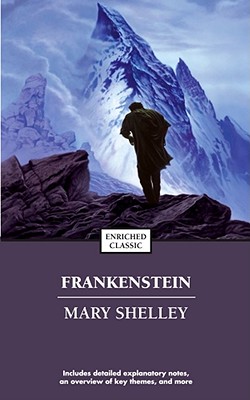 I'm glad I read the original version, and I can see why Mary Shelley's story has remained so firmly rooted in society's imagination. Much like the creature it centers around, the story gains its strength from joining many disparate facets--yet it is more than the sum of its parts. For those wanting a horror story the creature is certainly a formidable foe. For those craving an adventure tale the story starts with an arctic explorer and involves travels all over the globe. It is a classic outsider story that anyone who has ever felt cast out can relate to. It is a tale of the power of science and yet it also cautions us to use that power wisely. It is a tale of family, friendship, love, betrayal, murder, vengeance, and remorse. As the fears of society changes, different aspects of the novel can be highlighted to reflect those changing dangers.
The story has become so widespread and ingrained in our culture that it's hard to read it fresh--without any previous knowledge of it. That means that modern readers each bring their own set of biases and preconceived notions of what Frankenstein is to the story. Personally, I kept getting angry with Frankenstein for being so mean to Benedict Cumberbatch! Someone reading the original after having read Oppel's new stories about the young Victor Frankenstein might have more sympathy for his character, though. Perhaps the strongest aspect of the story and part of why it has survived for so long is that it does remain ambiguous in many areas and reserve judgement of its characters. By setting up the framework of a story within a story within a story it makes it very clear that the narrators each have their own biased perspectives and none are entirely trustworthy. That means that the story can be different for each reader, which is part of why it has been such a rich vein for adaptations. Much like Frankenstein's creature, what you get out of the story depends on what you put in.
Frankenstein by Mary Shelley: buy it or check it out today!
Next up: my review of This Dark Endeavor by Kenneth Oppel--a story of a young Victor Frankenstein
Sunday, January 15, 2012
New Year, New Look, New Title
 |
| The Auld School Librarian in her natural habitat...totally not posing or anything |
I have recently received notice from San Jose State that I have officially graduated! Now that I am in proud possession of an MLIS I can call myself a librarian. This is a big milestone for me, so I thought it merited a re-branding of my blog. I only came up with the "Sassy Shelver" moniker because I couldn't call myself a librarian at the time and because between my jobs at a library and a book shop I was in fact doing a lot of shelving. Now however, I rarely shelve books so it no longer seems right to call myself by that name. So after a Skype conference with my good friend Laura spit-balling some ideas I came up with "Auld School Librarian."
I like this name for many reasons. Firstly, I do like to sew, write letters, play backgammon, and engage in other pastimes from, well, the past. I enjoy retro clothing styles, I shun contacts in favor of glasses, and I wear my hair long and often in braids. Secondly, in many ways I am a stereotypical 'old school' librarian: I wear the aforementioned glasses, I have a cat, I am shy around strangers, I generally dress conservatively and sometimes even wear my hair in a bun. Thirdly, I work in an elementary school so I thought it would be clever.
I was going to use 'old school librarian,' but there was already a blogger blog with that name (and one post from 2005, but still crouching on the domain) so possibly because it was so recently the new year with the annual singing of 'Auld Lang Syne' I thought of solving my problems with Scotch. In the end I'm glad that someone was crouching on the 'old school librarian' name because 'auld school' is more unique and it gives a little nod to my Scottish friends. I've visited them the past two summers for about a month each time and thoroughly enjoyed myself. Both because of the company and the country. Hopefully I will visit them again this summer. The picture I'm using as the background (and the one at the top of this post) is actually a picture of me in Scotland, at my favorite castle, Dunottar. So even though I am not myself Scottish I feel at least slightly justified in using a Scottish word in my title.
 |
| I look down my glasses at you! Outside of Amsterdam's public library. |
Finally, I know from reading That Book Woman by Heather Henson to classes that old-school librarians are actually pretty tough cookies. The pack horse librarians of the Appalachians traveled miles by horse, mule, and foot across rivers, mountains, and rocky terrain to reach remote houses and schools. Plus, Casanova was apparently a librarian. So really, old-school librarians aren't the stereotypical shushers people seem to think of them as, and I am proud to number myself among their company.
 |
| My bedroom Senior year of undergrad. Wearing my 'baby got books' t-shirt, sitting under my 'people who really love books read naked' poster, and generally looking stereotypical. |
Friday, December 30, 2011
Year in Review
This has been a busy year for me. During the school year I worked full time and attended grad school online. This summer I was all over visiting friends and family in Scotland, Amsterdam, Oregon, and Southern California as well as attending a wedding here in the Bay Area. I hope next year my summer will be just as busy but my school year will be a bit calmer because I have finished grad school.


That's right I have finished my last classes to get my MLIS from San Jose State and will hopefully get a letter verifying this soon because I will be paranoid that I forgot something until then. I am very excited about finally being an official librarian so I no longer have to correct people when they act as if everyone who works in a library is a librarian and say that I'm actually a library clerk. Also, not going to grad school any more will be nice. I've been going to school with no breaks other than summer since I was in preschool and have been working at the same time since my senior year in high school so only working forty hours a week seems like semi-retirement to me.
I have plenty of plans to fill my new-found free time though. I'll finally have time to do more sewing and crafting and hopefully I'll be able to exercise and cook more as well. Perhaps I'll even be able to keep up with my languages or even learn a new one. Maybe I'll learn guitar. Maybe I'll go rockclimbing. I'll be able to do all the things I said I would when I had free time. Or at least some of them. It's all very exciting and a bit intimidating.
I'm also thinking about doing a bit of an overhaul on the blog. I like the Sassy Shelver name but now that I can actually call myself a librarian I'm tempted to take advantage of the fact. Plus, I don't actually do much shelving any more. We'll see.
I've also, of course, done a lot of reading this year. And I hope to do even more next year now that I don't have homework sucking up my time. Here's a review of the books I read in 2011. I am proud to say that I reviewed all of them, although some of these reviews will not come out until next year because I developed a bit of a back log as I was busy wrapping up grad school.
I read 85 books in 2011. I've broken it down into audience so I can see how well I'm balancing reading for work and reading for pleasure, genre to see if I'm successfully reading widely so I can recommend different kinds of books, and nationality of author (for the fiction books) to see if I'm reading a diverse mix. I then whipped up not terribly attractive but very easy to make excel charts of them because it's the holiday season and I've been busy. Without further ado, the stats:

I think I did a good job balancing audience, although with my juvenile and tween fiction classes to take care of I didn't do as much adult reading as I would have liked and I definitely felt it by the end of the year. I was craving some nice complex adult narratives (and this craving was thoroughly satisfied by Sea of Poppies, which I'll post about later.)

I did an okay job reading widely although it's clear what my favorite genre is.

I would like to have better percentages on this chart next year. I read 35% non-American authors, but I mostly did this by birthplace so some of those authors were born elsewhere and came to America later. Additionally many of those were from other English-speaking countries. Only 7 or 9.3% of the authors originated from non-English speaking countries and only 4 of the books I read were originally written in another language.
I won't make any resolutions for the next year here because it's usually a futile process for me. My feelings are summed up pretty well by the webcomic sheldon. I will say that I am excited for the new year though and I hope you are too. To quote Neil Gaiman:
"May your coming year be filled with magic and dreams and good madness. I hope you read some fine books and kiss someone who thinks you're wonderful, and don't forget to make some art -- write or draw or build or sing or live as only you can. And I hope, somewhere in the next year, you surprise yourself."
Subscribe to:
Posts (Atom)